The Pie and the Patty-Pan
London: Frederick Warne and Co., 1905.

The Pie and the Patty-Pan
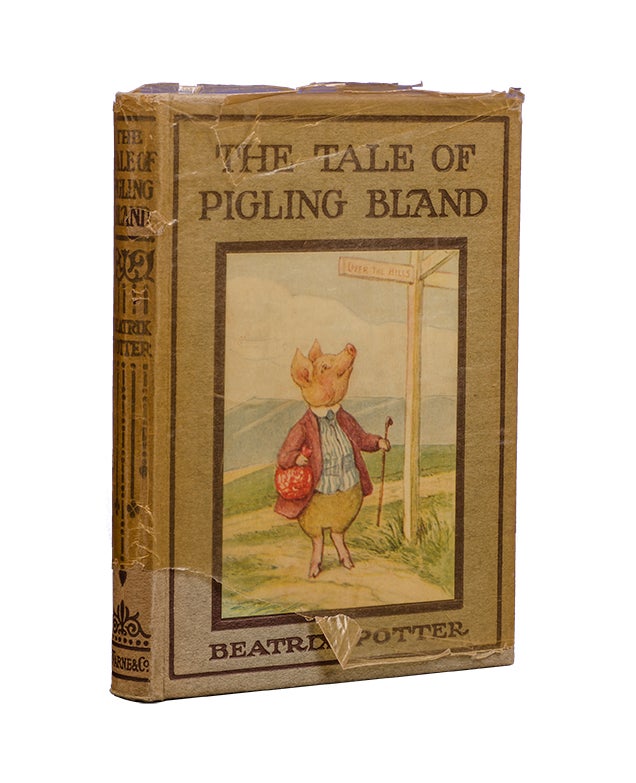
London: Frederick Warne and Co., 1905. First edition, later printing. Small quarto (6 7/8 x 5 1/4 inches; 174 x 133 mm.). 51, [1] pp. First edition, later printing (with “1905” on the verso of the title-page). “The year 1905 appears on the front of the title-page of the first printing. The early printings have plain mottled lavender end-papers, which were shortly replaced by an end-paper design featuring a pie and a patty-pan. The cover picture was then changed from a cat in a small circle, to one of Ribby sitting by the fire, in a large circle” (Linder). Color frontispiece and nine color plates (included in pagination), twenty-one vignettes in black and white. Sumptuously bound by Sangorski & Sutcliffe ca. 1980 (stamp-signed in gilt on rear turn-in). Full dark brown crushed levant morocco. The front cover with a fine oval multi colored morocco image taken from the black and white illustration on page 11 of Duchess "And my pie was going to be veal and ham." The cover also decorated in gilt with tiny circles and a vertical stalk with leaves. The rear cover a fine oval multi colored morocco image taken from the color plate of 'Ribby' on page 50 "So there really was a patty-pan" similarly decorated in gilt as on the front cover. Smooth spine lettered in gilt with a small orange and green floral inlay at top. Gold and brown decorated end-papers, original front end-papers with a 'pie and patty-pan' design in pink and original brown front cover bound in at end with an onlaid picture of a cat in a small circle. Housed in a dark brown morocco edged, brown cloth slipcase with fleece-lining.
Inspired by a summer spent at the Lakefield Cottages, the story follows the misadventures of a cat and dog at a tea party, when the latter thinks they have mistakenly eaten the serving plate (also called the patty-pan). While filled with anthropomorphic animal characters, scholars see the narrative as a commentary societal conventions, hierarchy, and etiquette. "Beatrix Potter, writer of some of the most beloved children's books of all time, was a woman of immense talent, indefatigable spirit, and a generous heart...Although she grew up in London, she was deeply influenced by long family holidays in the countryside, first in Scotland and later in the English lake district. As was the custom in families of her class, she was educated at home by governesses. An eager student of languages and literature, she grew up loving classic folk and fairy tales...Her talent for drawing and painting was discovered early and encouraged" (Beatrix Potter Society). Her career began with the release of the now-beloved Tale of Peter Rabbit; and her subsequent works expanded into a magical world of anthropomorphic animals such as Tom Kitten, Squirrel Nutkin, and Benjamin Bunny.
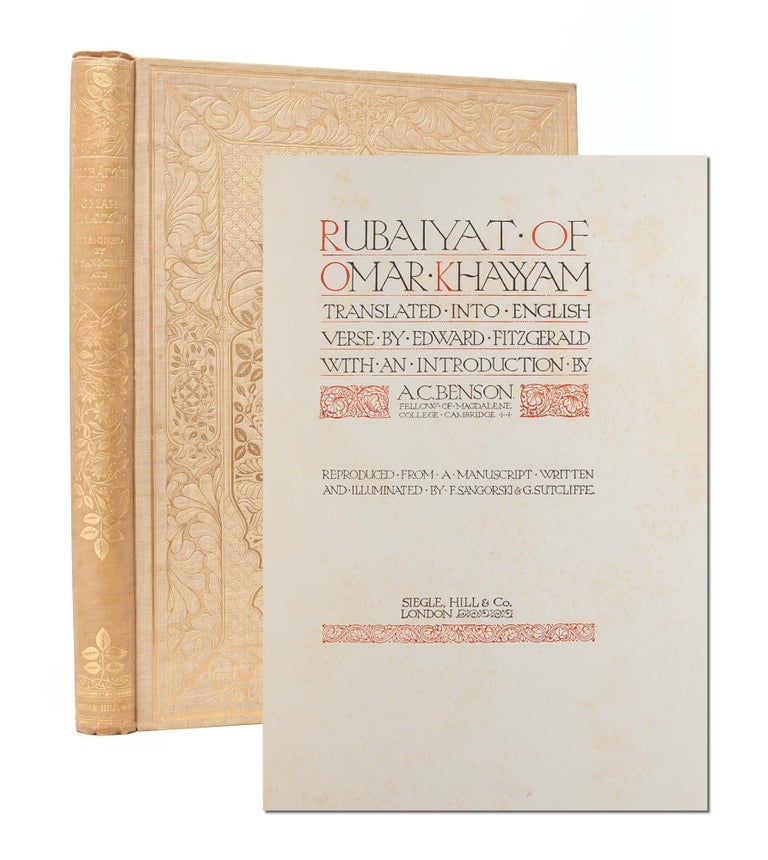
In a superb 'double' pictorial inlaid binding by Sangorski & Sutcliffe, one of the leading bookbinders in London. The story of the Sangorski & Sutcliffe Bindery reads like something out of a novel—when two of Douglas Cockrell’s talented apprentices, Frances Sangorski and George Sutcliffe, were laid off during an economic downturn they began working out of an attic. Eventually their bindery would be famous for its intricate multicolored leather inlays and elaborate gold and jeweled bindings.
Linder, p. 425. Quinby 9. V & A 1542. Fine (Item #6353)